
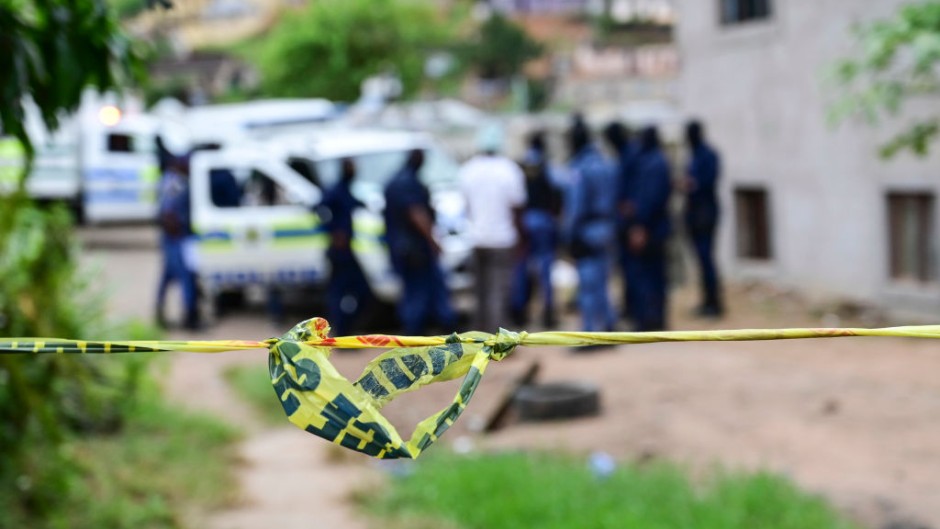
JOHANNESBURG - Researchers are expecting a modest decrease in the crime statistics set to be released on Friday.
The declines are likely to be seen mainly in contact crimes, such as murder and other violent offences.
Professor Dee Khosa from Unisa’s College of Law and School of Criminal Justice says even gender-based violence cases could show a slight decrease.
"But a small percentage decrease does not mean progress," she says.
Acting Police Minister Firoz Cachalia will release the fourth-quarter crime statistics for the 2025/26 financial year.
The figures will outline key trends in reported crime over the three-month period.
Previous statistics showed that murder declined by 8.7 percent in the third quarter of 2025, while overall violent crime dropped by 6.7 percent during the same period.
Despite this, Khosa warns that kidnappings could increase, as criminal syndicates become more brazen.
"The drop in the crime stats may be modest, but it is also fragile," she says.
She adds that while targeted operations may temporarily reduce crime, levels often rise again once these operations end.
READ: Strengthening crime intelligence 'key priority', says Cachalia
Concerns have also been raised about the credibility and completeness of the statistics, and whether they fully reflect the extent of crime nationally.
Despite the projected declines, overall crime levels remain critically high across the country.
Khosa says the Madlanga Commission deserves some credit for exposing corruption within the police, but adds that more is still needed.
Meanwhile, Operation Prosper — which involves SANDF deployments to crime hotspots — has led to more than 1,000 arrests over the past seven weeks.
However, Khosa warns that the rising costs of the operation are a major concern.
She says the deployment is effectively buying time for a responsibility that ultimately lies with the police: fighting crime.
Attention will also be on whether intensified law enforcement operations are having a lasting impact.
The release of the statistics comes amid growing scrutiny over public trust and institutional integrity within SAPS.